
The LP and the payout queue
What you're trading against, where its money comes from, and what happens when it can't pay out a winner immediately.
The LP
The LP is the protocol's balance of USDC held to settle coupons. It starts at $0. There is no seed capital, no founders' deposit, no upfront LP raise. The LP grows over time from cumulative user losses.
There is also no way for anyone to deposit directly into the LP. The only way to get exposure to LP economics is to hold $BET, the protocol's native token, which is minted to traders against losing coupons.
The payout queue
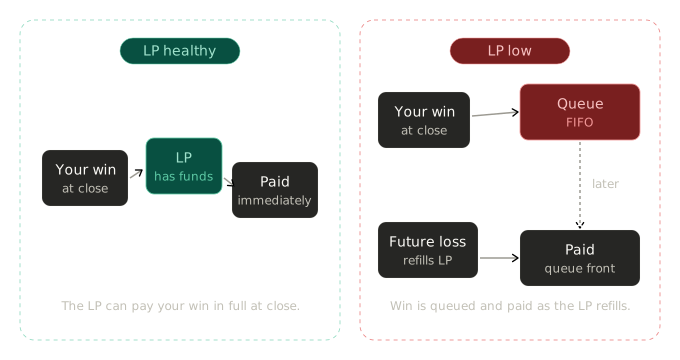
Sometimes the LP doesn't have enough USDC to immediately pay a winning coupon's profit. When that happens, the profit goes into a FIFO queue. The program keeps a running list of unpaid wins and pays them out from the front as future losses refill the LP.
Only the profit portion of a winning coupon can land in the queue if the LP is short. Your stake is escrowed with the coupon and refunded directly on a win; it never depends on LP solvency.
What this means for you
If a winning coupon settles and the LP can pay you immediately, you're paid immediately. If it can't, the queue absorbs the difference and pays you out as solvency returns. Your queued payout is real on-chain debt: not a refund, not a haircut, just a delay.
Trading while the LP is low or underwater is incentivised by the $BET emissions curve: that's exactly when $BET mints fastest, and the queue tends to be empty.
For the academic background on this mechanism see the Martingaler LP overview. For the on-chain implementation see Solvency model: three-bucket queue.